

Tone Matters More Than We Realize
In communication, meaning is shaped as much by delivery as by content. Tone of voice, facial expression, and body language often determine how a message is received—especially in conversations involving emotion, trust, or intent.
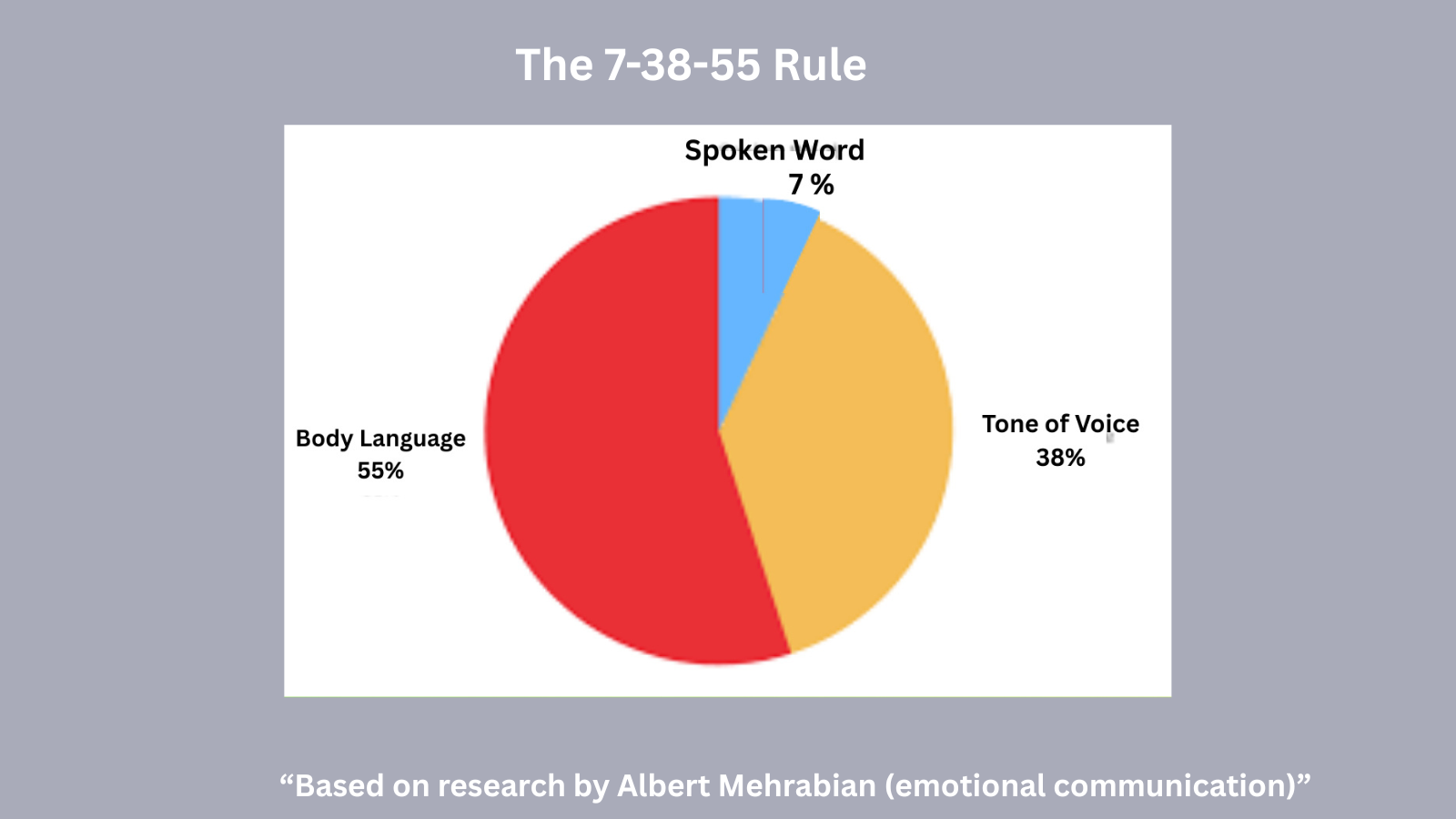
Research by psychologist Albert Mehrabian is frequently cited in this context. His findings, commonly referred to as the 7-38-55 Rule, suggest that when people interpret emotional or attitudinal messages:
7% of meaning comes from the words themselves
38% comes from tone of voice
55% comes from nonverbal cues such as body language and facial expression
While this research does not apply to all communication (such as technical instructions or factual information), it highlights an important principle: when emotion or intent is involved, people rely heavily on how something is expressed, not just on what is said.
A message delivered with warmth and openness can build trust and clarity. The same words spoken with tension, defensiveness, or closed body language may create confusion or resistance.
Why This Matters
Effective communication depends on alignment. When words, tone, and body language reinforce one another, messages feel authentic and credible. When they contradict each other, even well-intended messages can be misunderstood.
In professional settings—feedback conversations, leadership moments, or conflict resolution—awareness of tone and nonverbal cues is often the difference between connection and breakdown